Claim Status Feeds Versus Portal Polling How RCM Vendors Actually Deliver Real-Time Visibility
Choose claim status feeds over portal polling to catch denials before appeal deadlines close.
Revenue cycle management services for private practices promising “real-time visibility” should be evaluated by how claim status reaches the billing team's work queue. Claim status feeds and portal polling differ in structure and speed. Getting claim status to the work queue takes connections to each payer, status categories that tell billers what to do, and billers who can work exceptions before recovery windows close.
Why claim status visibility is not a single thing
A biller who logs into five portals every morning to check claims submitted three days ago can find out what happened, but may learn it too late to act. Each lookup sits between the payer's decision and the practice's response. “Real-time visibility” is therefore a marketing claim. Its operational meaning begins with how the system retrieves status data.
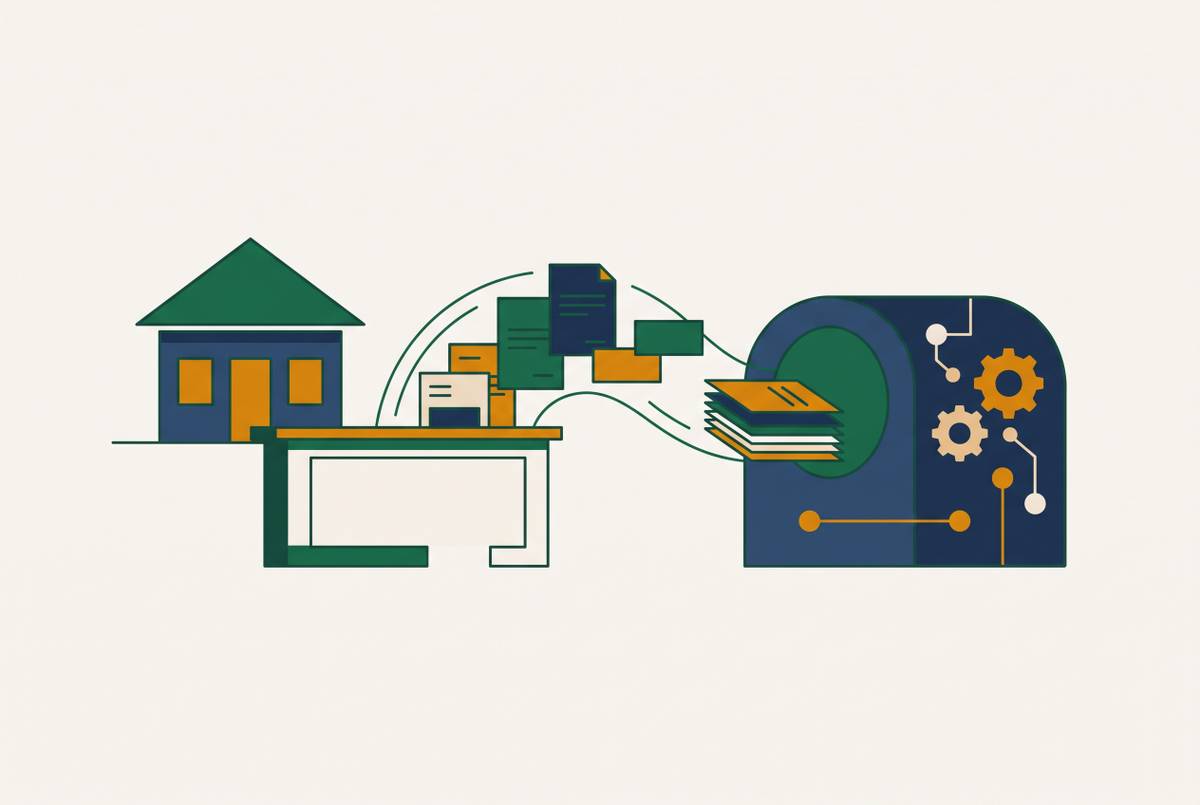
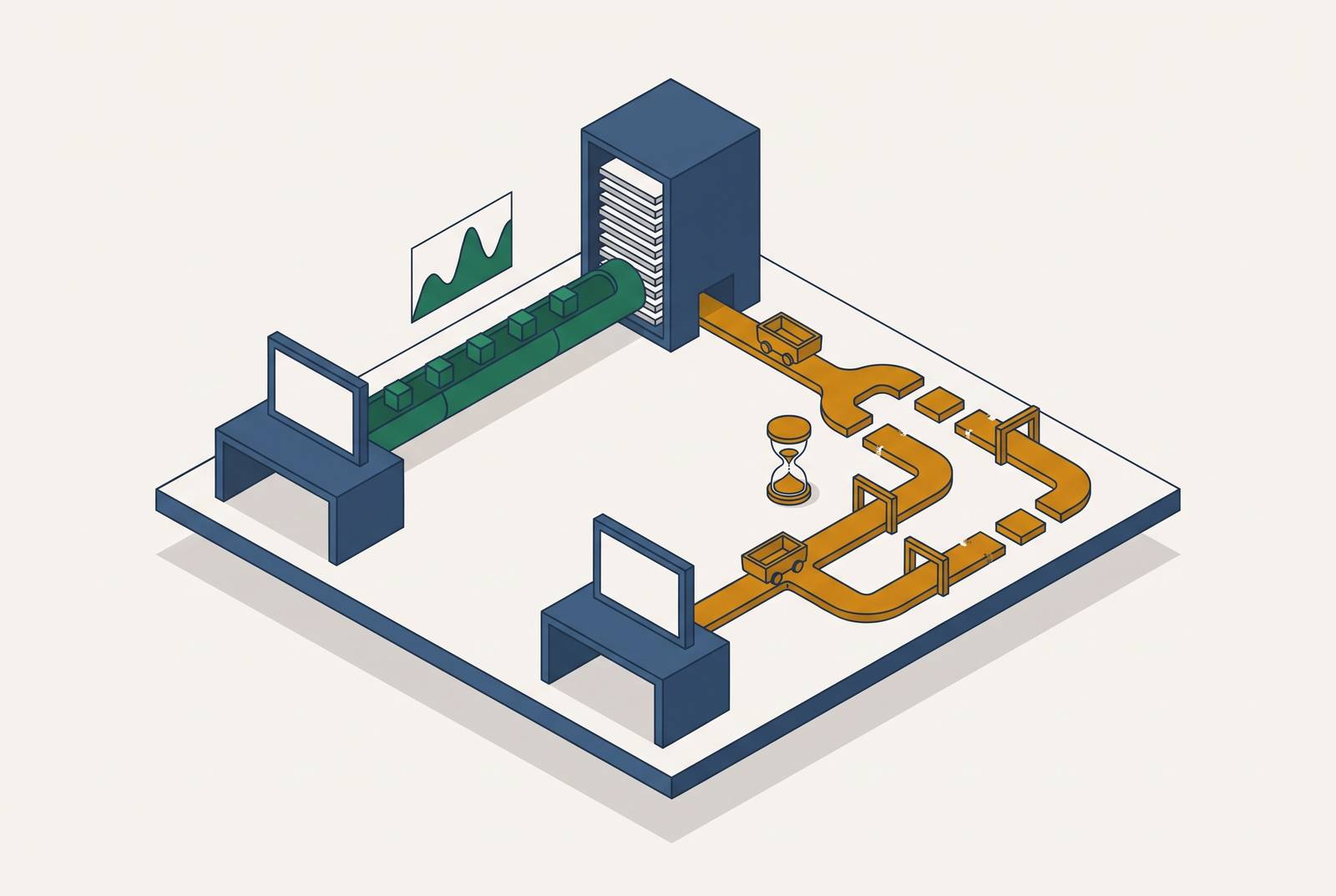
Two delivery architectures sit behind that claim. Programmatic methods use the HIPAA-adopted X12 276/277 transaction pair or FHIR-based APIs to exchange structured data. Portal polling instead requires a person, or software imitating that person, to retrieve information through a payer's website. That difference affects when a denial shows up and whether staff work on a stalled claim before the filing deadline.
How the 276/277 transaction pair actually works
CMS guidance identifies the Health Care Claim Status Request and its corresponding response as the adopted electronic claim-status standard for HIPAA-covered entities, including Medicare and Medicaid. The provider sends a 276 inquiry, and the payer returns a structured 277 response. A-codes identify acknowledgment stages, P-codes indicate that a claim is pended, F0 indicates finalized payment, F1 indicates finalized denial, and R-codes signal a request for additional information.
The exchange can run interactively or in batches. In interactive mode, a biller's query triggers a 276 and returns the 277 inline, with a response target of roughly 20 seconds. Batch workflows instead process previously queried open claims overnight. Batch mode dominates legacy operations, while modern practice management integrations support interactive lookups where the payer's endpoint permits them. Neither mode makes the 277 a payment instrument. The ERA, or 835, is the authoritative remittance transaction for payment posting and reconciliation, so a finalized status must remain distinct from remittance confirmation.
How portal polling actually works — and why it persists
Portal polling starts with a different sequence. A biller selects claims from an aging report, signs into a payer portal, searches by claim identifier, reads the result, records it in the billing system, and creates a follow-up task. Across dozens or hundreds of claims, the retrieval work compounds before resolution begins. The delay therefore includes both the interval between checks and the effort needed to transfer the result into an actionable workflow.
Its persistence is rational because electronic coverage is uneven. Some regional Medicaid managed care plans have no electronic claim-status support, even though they account for many of the claims at the practices they serve. For those claims, staff may still need a portal to find the status. First-generation automation addressed this gap with screen-scraping robotic process automation, or RPA, which clicks through portals on a schedule. That can reduce manual keystrokes, but it remains a proxy for the same retrieval process.
Where portal-scraping RPA breaks structurally
The strongest argument for RPA is also its limit. When a payer offers no EDI or FHIR connection, some form of portal interaction remains necessary, and automation can bridge that gap. A changed layout, a new multi-factor authentication step, or a rate limit can break the scraper. Because the scraper has no formal integration agreement with the payer, an unannounced portal change has no corresponding notification path.
The failure signal differs from an API failure. API endpoints can return structured error codes, but when a changed CSS selector breaks a scraper, it may return screenshots and broken HTML with no structured signal that it missed status data for a group of claims. Such failures can remain silent. As the number and kinds of portals grow, engineers spend more time fixing scrapers and less time working on the product. Scraping should serve as a targeted fallback because shifting billers from status-checking to appeal-writing requires reliable information.
What FHIR-based APIs add beyond the 276/277 standard
FHIR-based APIs extend the programmatic approach beyond a claim-status inquiry and response. They support structured prior authorization submission and status retrieval, richer denial detail, and payer-to-payer data exchange that the claim-status transaction pair does not natively provide. Prior authorization illustrates the practical difference clearly. A programmatic submission and status path can replace a fax-and-phone workflow with data that feeds billing system logic. It does not turn authorization status into claim payment confirmation.
CMS's Interoperability and Prior Authorization Final Rule, CMS-0057-F, mandates four FHIR APIs, including an enhanced Patient Access API, a Provider Access API, a Payer-to-Payer API, and a Prior Authorization API. The covered organizations are Medicare Advantage organizations, state Medicaid and CHIP fee-for-service programs, Medicaid managed care plans, CHIP managed care entities, and Qualified Health Plan issuers on the Federally Facilitated Exchanges. The rule sets January 1, 2026 for prior authorization decision clocks and denial reason requirements, March 31, 2026 for the first public metrics posting, and January 1, 2027 for full API implementation.
That scope is substantial, but it is not universal. The rule covers commercial and employer-sponsored plans only where they are expressly listed. For independent practices, that leaves a significant connectivity gap. Implementation quality and completeness will also vary by payer, so an API requirement does not establish that every needed workflow will be supported equally well. FHIR expands the required programmatic infrastructure without eliminating the need to validate actual payer connections.
What the structural difference means for denial detection and AR timing
The retrieval method determines when a denial can enter the work queue. In an overnight batch workflow, a claim denied at 2 p.m. surfaces the following morning. Under portal polling, the same denial appears when a biller next checks that payer, potentially two or three days later if it is outside the daily rotation. Interactive access can shorten that interval, but only when a query occurs and its result reaches the queue.
The lost time comes out of the recovery window. Most commercial payers measure appeal filing deadlines from the denial date. The longer a denial goes unseen, the later recovery work starts and the closer the deadline gets. It also leaves denied claims aging in accounts receivable before staff can begin resolving them. The operating principle is to work each denial when it lands, but that requires real-time or near-real-time delivery rather than waiting for a manual or overnight review cycle.
Why payer coverage gaps make a single-method strategy unrealistic
A feed-only strategy cannot cover every payer workflow today. Gaps are especially consequential when regional Medicaid managed care plans represent a substantial share of a practice's claims. An RCM operation cannot close those gaps unilaterally. A payer may also be in a connectivity directory even if the connection does not support the payer ID, line of business, and transaction type the practice uses.
The hybrid can use electronic claim-status transactions and FHIR feeds for payers that support them, and structured direct-HTTP or portal integration for other workflows, with a clear fallback and someone assigned to each exception. Coverage mapping should start with the practice's top payers by volume and plan type. For each segment, the evaluation should establish the connection method, authentication requirements, returned fields, and response timing. This makes the hybrid an operational plan rather than an accumulation of unsupported claims that staff must discover and chase manually.
What "real-time" actually means in practice management system integrations
Transmission is only the first step toward usable visibility. A status response must be normalized into consistent operational categories, written back to the billing system, and routed to a work queue. Even with a structured exchange, someone still has to interpret each payer's codes and wording. Normalization maps those responses into categories such as denied, pending, or additional information required. Without that translation, a feed may bring in data quickly but leave staff to work out what they need to do.
Modern automation platforms can monitor status continuously, decode EDI and CARC codes, and write updates back to the billing system live. They can also consolidate information from clearinghouses, payer portals, EDI responses, and remittance systems. Consolidation makes those inputs useful within one workflow. However, a separate login, dashboard, or manual export step can reintroduce the fragmentation the integration was meant to remove. “Real-time” therefore needs to describe both the speed of the payer's response and the path into the practice management system.
Human expertise belongs in that path as well. A payer may consistently pend claims for a particular documentation reason before denying them, and a status category alone does not capture that pattern. A platform designed to track payer behavior over time can surface such intelligence, while billers with payer-specific knowledge interpret and work the exceptions. This is the substantive case for human-plus-machine operations.
Questions a practice should ask to evaluate what their RCM operation is actually delivering
A practice evaluating its RCM operation should begin with the delivery method. Does the system use electronic claim-status transactions, FHIR API calls, screen-scraping, or manual portal access for each payer in the actual mix? Does it operate interactively, overnight, or through a combination that changes by payer? For unsupported connections, what is the fallback method, and who owns the exception? These questions establish what “real-time” means before the discussion moves to dashboard features.
How are payer-specific responses mapped to actionable work categories, and who maintains those mappings when responses change? How quickly does a denial reach the work queue after the payer issues it, and is that interval measured and reported? Does the update reach the existing billing system, or require a separate workflow? Measured delivery time is more useful than a general claim of continuous visibility.
Coverage should then be tested against actual claim volume. For each top payer, which payer IDs, plan types, lines of business, and transaction variants are supported? What happens when a connection fails, and does a directory listing mean a working connection for the practice's specific claims? The same scrutiny belongs on human oversight. Who works incomplete or ambiguous responses, what payer-specific knowledge do they bring, and is there a defined escalation path to keep claims from going unworked?
For practices that want to track claims without hiring a full billing department, those answers say more about what the service does than an automation label does. The adoption principle is to automate what the operation already measures and select tools that address its top three CARC codes. Accountability begins with a traceable path from payer response to owned follow-up. A practice that can identify where that path slows or breaks can hold its RCM operation responsible for the work needed to recover revenue.