Payer Policy Checks and Denial Work Queues as a System for Small Practice Claim Recovery
Linking pre-submission checks to denial queues cuts small practice claim recovery time.
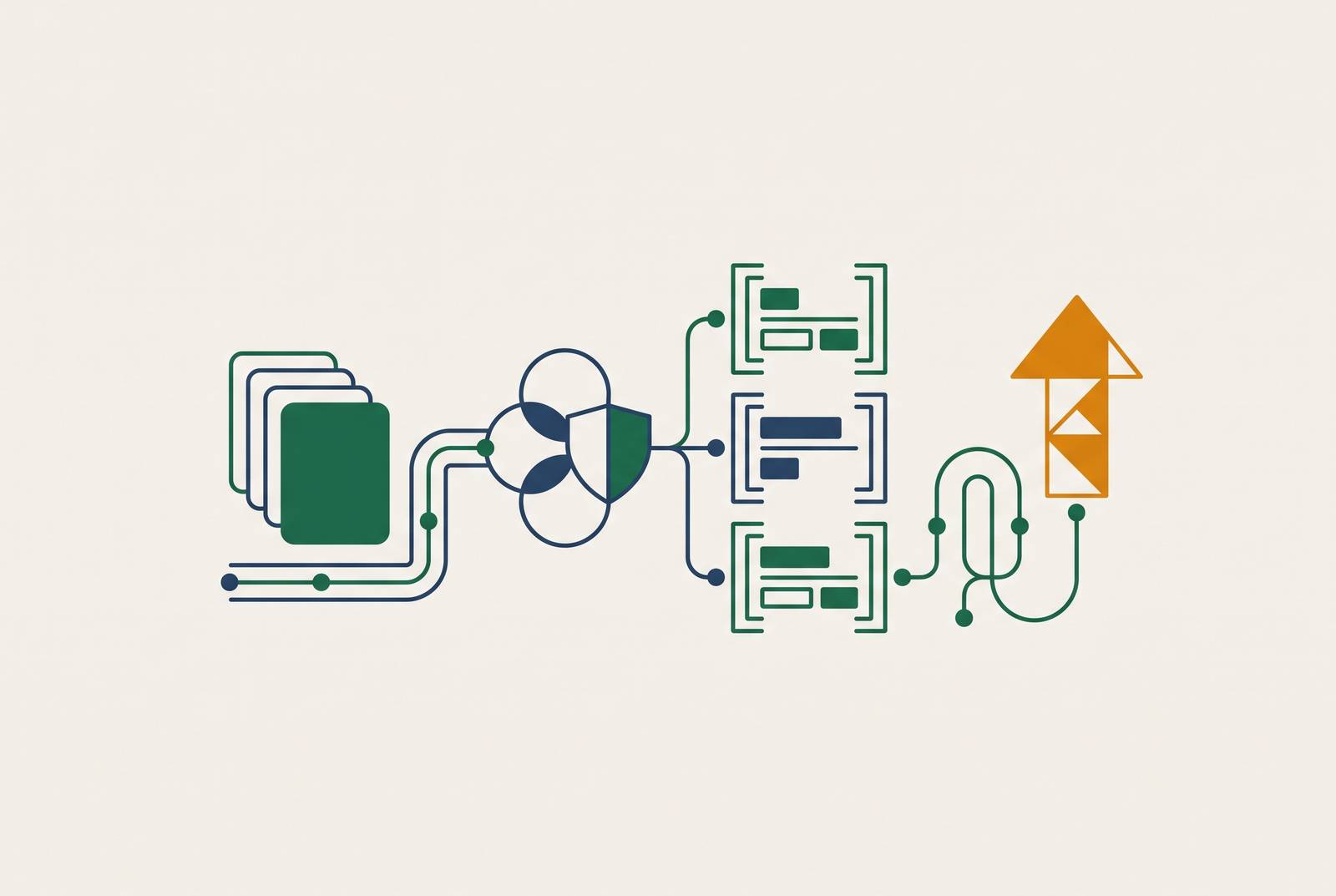
Small practices can cut claim denials by linking checks of current payer policy before claims are sent with a structured denial work queue for claims that are rejected. Staff should use each denial to improve the next submission, while better submissions give them more time to recover claims that still need work.
Why 2026's payer environment is different from prior years
Site-of-care scrutiny, Medicare Advantage coverage changes, and tighter prior authorization requirements are putting pressure on different parts of the same claim. CMS's 2026 Hospital Outpatient Prospective Payment System rule applied Physician Fee Schedule rates to drug administration services in grandfathered off-campus outpatient departments starting January 2026. Commercial payers are also challenging whether services belong in a lower-cost setting. For a practice, the distinction is important because authorization of a procedure does not by itself protect against a site-of-care denial.
KFF and Johns Hopkins researchers describe major insurers exiting hundreds of counties effective January 1, 2026. Enrollees who did not select new plans reverted to Original Medicare. A claim prepared using the former plan can therefore go to an inactive payer relationship even though the patient remains insured.
CMS's CMS-0057-F fact sheet places operational requirements, including specific reasons for denied authorization decisions, in 2026, but sets the Prior Authorization API compliance date at January 1, 2027. The rule does not require API-based claim-matching across the board for 2026. Coverage, authorization, and payment rules can each invalidate assumptions made earlier in the workflow. When checking and recovery stay separate, staff have no reliable way to use a denial to correct those assumptions.
How payer policy variation makes front-end checking a moving target
Payer rules vary not only between insurers but also between plans within the same insurer. Employer and individual plans can have different authorization requirements for the same service. Drugs and procedures can enter prior authorization lists mid-cycle, including services that previously needed no approval. Staff cannot rely on the policy they learned at enrollment when they prepare later claims.
Documentation requirements move with those rules. A payer may require more clinical notes, specific diagnosis codes, or evidence of prior treatment before it will accept the submission. With bundling edits, a national edit release may leave out some of a payer's current proprietary rules. Manual tracking and periodic staff training leave an interval between a change taking effect and the practice learning what changed. The denial often becomes the first notice.
Services such as Altair Health integrate real-time payer policy updates into the submission workflow so that authorization requirements and payer-specific edits inform claim preparation. Electronic prior authorization can also bring status updates into the system through structured transactions. The Prior Authorization API required under CMS-0057-F will support that exchange, but its January 1, 2027 compliance date should not be confused with present readiness. Whether information arrives electronically or through staff review, it has value only if someone or something acts on it before submission.
What a structured pre-submission check actually covers
A structured pre-submission check begins with eligibility at every encounter. The practice confirms active coverage, the correct plan, and network status for the date of service rather than carrying forward an enrollment-time answer. That check helps prevent claims from going to an inactive payer relationship after coverage changes. It also establishes which plan's rules govern the remaining work, because accurate authorization checking depends on identifying the correct coverage first.
The practice then matches the authorization to the claim at the data-field level, including the CPT code, modifier, and site of service. An approval is not enough if it describes something different from the submitted claim. Authorization expiration tracking alerts staff when an approval is about to expire so they can catch it in time. These are operational safeguards against mismatches, independent of any CMS requirement for automatic field-level denial through an API in 2026.
Claim scrubbing then tests the submission against current payer-specific edit tables. A scrubber using January's NCCI bundling edits alone may miss proprietary conflicts affecting multi-procedure spine, ophthalmology, and orthopedic claims. Its updates must keep up with the payer's actual rules, which may require more than the national quarterly release. Site-of-service review completes the check by establishing that the record supports the medical necessity of the location before submission. Passing one of these checks does not show that the whole claim is ready.
Why most small practices still treat denials as a back-office backlog instead of a recovery queue
Once a denial arrives, the limiting factor is often not whether staff understand billing but whether the work has a defined place to go. In small practices, the same people may handle scheduling, patient calls, authorization calls, and billing. A denied claim must compete with those immediate demands. Without assignment and priority rules, its value or urgency does not automatically bring it to the front.
Appeal windows make that competition consequential. They are typically measured in weeks to a few months, so a claim can lose its recovery path while it waits for attention. A high-dollar denial can stay buried, while the deadline for a low-dollar denial can pass without anyone deciding to give up on it. In both cases, inaction becomes a write-off rather than a deliberate assessment of recoverability. A backlog records the presence of work but does not necessarily make that work happen.
Staff turnover exposes the same structural weakness. If the status of an appeal exists mainly in one biller's memory, a departure can interrupt the recovery effort even when the underlying claim remains recoverable. The next person must find out what happened before deciding what to do next. More effort alone does not resolve this problem because effort still needs direction and continuity. What is missing is a queue with triage, ownership, priority, and deadline tracking.
What a structured denial work queue does that a spreadsheet cannot
A functional denial queue first classifies the failure point. An eligibility error belongs to a different correction path from incomplete authorization, missing documentation, a payer-side error, or a bundling edit conflict. Tagging the origin directs the denial toward the person or function able to resolve it. Without that distinction, staff use up part of a limited appeal window finding out that the claim went to the wrong place.
The queue then orders the work by dollar value and deadline proximity. It also distinguishes correction and resubmission from a formal appeal, a documentation supplement, or a peer-to-peer request. Those routes are not interchangeable, and sending every denial through the same process delays recovery. A flat spreadsheet can hold these facts, but merely recording them does not supply the assignment, routing, and follow-through that make a queue operational.
The final requirement is linkage to the claim's origin. A denial tied to a missed authorization requirement or bundling update should flag the pre-submission check that failed to catch it. The queue must also retain payer-specific behavior, including patterns in which a payer denies a procedure on initial submission but approves it on first appeal. That history can help staff choose an appeal and avoid reworking a claim that needs no changes.
How pre-submission checks and denial queues operate as one loop, not two tasks
The connection between those actions is the core of claim recovery. When a denial identifies a missed bundling edit or changed authorization requirement, the finding should update the pre-submission check that same day. If the check stays unchanged, similar claims keep passing through it while staff work on the first denial alone.
Information also flows in the other direction. Eligibility checks, authorization expiration tracking, and site-of-service documentation review keep preventable work out of the denial queue. That reduction matters because the remaining claims compete for finite staff time. Care New England cut authorization-related denials by more than half after adding authorization automation. That example illustrates how prevention works.
Payer-specific memory connects the two directions. If a payer's appeal pattern points to required documentation, that knowledge can change both the submission check and the queue's routing rule. The next claim gets the documentation it needs, while a denial already in the queue goes to the right appeal path without needless rework. In an integrated service such as Altair Health, staff check policy and handle denials as parts of the same operating loop. That loop breaks when separate staff or disconnected vendors exchange claims but not the lessons those claims produce.
What the loop breaking actually costs a small practice in 2026
The financial consequence begins with repetition. A missed site-of-care requirement or bundling update can generate a cluster of denials across similar claims. Without feedback from the queue, the practice keeps sending claims based on the same mistaken assumption. A month-end review may finally expose the pattern, but the earliest denials may already be approaching or past their appeal deadlines. The cost is therefore not confined to the claim that first revealed the error.
Two losses follow through different paths. Some claims remain recoverable but require correction, documentation, or appeal before payment can proceed. Others become write-offs because the recovery deadline passes before the work is completed. The notes do not establish a sourced physician-practice dollar estimate for those losses, so a universal financial benchmark would overstate the evidence. The operational distinction is still clear because delayed recovery and an expired recovery opportunity are not the same financial outcome.
Repeated modifier and documentation problems can draw a payer audit, so staff need to fix them upstream even when they recover individual claims. A denial is not itself proof of a false claim or a billing-privilege violation. The relevant exposure is the persistence of systematic errors without a process to identify and correct their cause. Closing the loop addresses that cause rather than treating each payment dispute as an unrelated event.
What closing the gap requires operationally for a small practice
A connected system requires three operating conditions and can be built without a new EMR or a wholesale staffing change. The first is continuous payer policy intelligence that reaches both submission checks and denial triage. The second is a structured queue that assigns work by failure origin, dollar value, deadline, and recovery route. The third is institutional memory that preserves payer-specific knowledge through staff turnover.
The system should work through existing EMR and clearinghouse connections rather than require the practice to displace workflows that already function. Altair Health offers this loop as a service for independent and small-to-mid-size practices, combining pre-visit eligibility verification, authorization tracking, current payer-specific claim scrubbing, denial tagging, queue prioritization, appeals and rework routing, and payment posting. Its in-house expert billers work the exceptions surfaced by AI, while practices retain their existing EMR and clearinghouse connections. That makes it an option for practices seeking both the checking functions and the staff capacity to work the resulting exceptions.
An in-house approach is also possible if the practice can sustain clear ownership and consistent staffing. Its minimum viable form includes encounter-level eligibility checks, a scrubber updated on each payer's actual schedule, a denial log tagged by origin and prioritized by deadline and dollar value, and a documented appeal escalation path. Manual coordination can approximate the loop, but continuity becomes harder when staffing changes interrupt the transfer of knowledge. The lasting asset is institutional memory that makes each resolved denial useful to the next claim.