Payer Bulletin Monitoring and the Lag Between Policy Change and Practice Awareness
Payer policy changes often go unnoticed until denials spike weeks later.
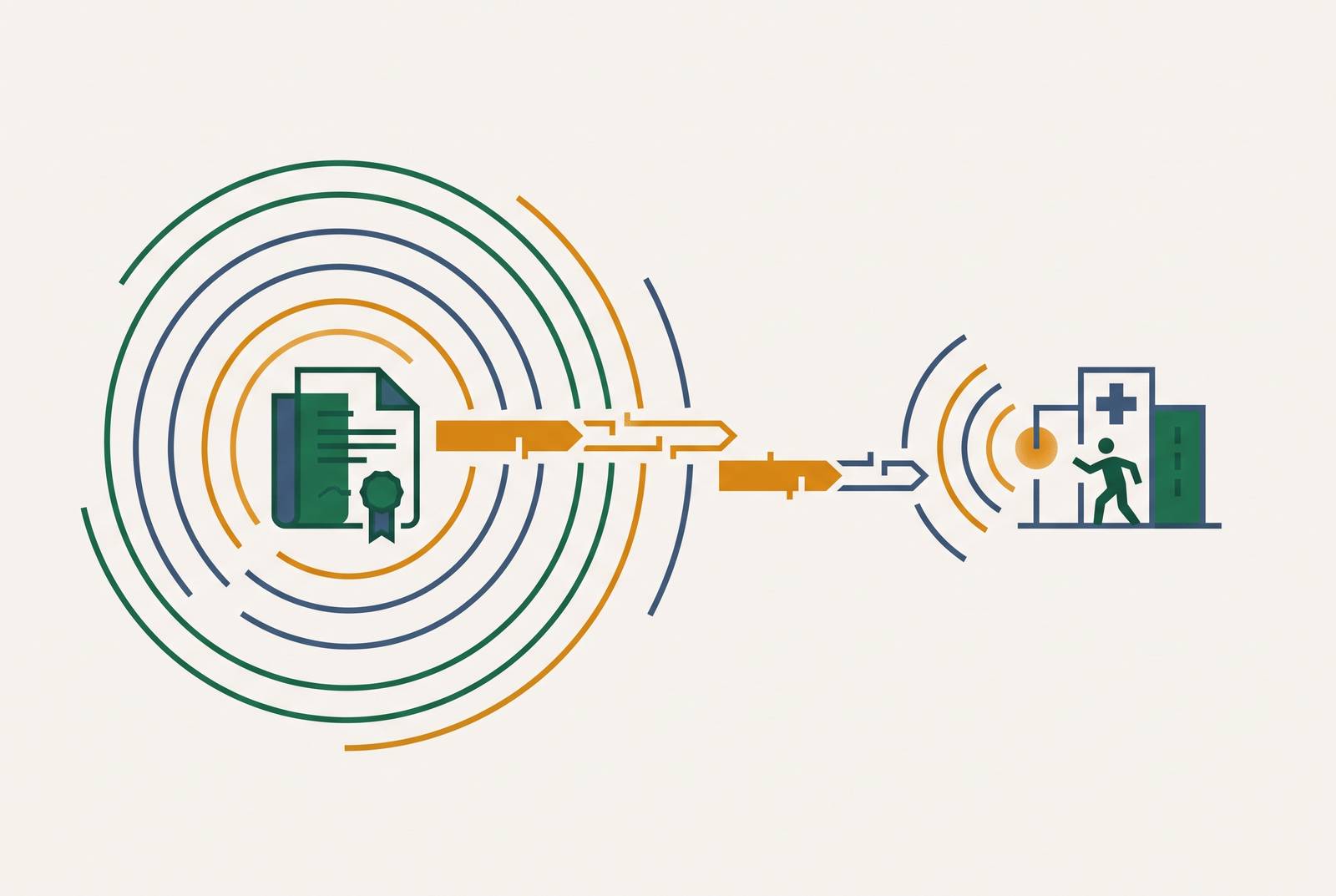
The sequence repeats with almost mechanical regularity. A payer updates a policy on its own schedule, quietly. The effective date passes. Claims keep going out under the old criteria because nobody at the practice has seen the update. Denials trickle in, then arrive in clusters, and billing staff only notice a pattern once enough claims have failed to make one visible. By the time anyone traces the denials back to a policy change, weeks or months of revenue sit stuck in appeals.
A mid-sized clinic in Texas lived this in the first quarter of 2024. A payer had quietly added a requirement: proof of failed physical therapy before approving an MRI. Nobody at the clinic caught the change before it took effect, and thirty-five percent of the clinic's MRI requests came back denied before anyone identified what had shifted on the payer's end.
Prior authorization is where this lag inflicts the most damage, because the list of services requiring authorization isn't fixed. A service that needed no prior approval last year can land on that list at any point, with no guarantee the practice sees the update before the first patient is scheduled. The practice submits the claim the way it always has and gets a denial instead of a payment.
The exposure window depends entirely on how often someone checks, and that's the whole problem in miniature. A practice reviewing payer bulletins monthly carries roughly 30 days of blind exposure at any given time; one that reviews annually can absorb denials for months before anyone traces the cause to a single bulletin. And when the one staff member who knew a particular payer's quirks leaves, that knowledge leaves with them. The next spike starts the investigation from zero, again.
Why practices misdiagnose denial spikes as coding or front-desk problems
Billing systems classify denials by CARC code, not by root cause. A medical necessity denial looks identical whether a coder left out a diagnosis detail or the payer changed its coverage criteria three weeks earlier without telling anyone. That flattening is where the misdiagnosis starts, and it reflects a design flaw in how denials get categorized: the code tells you what category the denial fell into, never why.
So when a spike shows up, the instinct is to look inward first, and that instinct is almost always wrong. Coder accuracy gets audited. Documentation gets reviewed line by line. Front-desk staff get retrained on eligibility verification. Those investigations consume real time, and they often produce fixes for problems that were never the actual cause. A practice can tighten its documentation standards in response to denials that had nothing to do with documentation and everything to do with a payer quietly raising its bar for medical necessity. Blaming the front desk is easier than blaming a policy nobody can point to, which is exactly why it keeps happening.
The loop reinforces itself. Without a way to line up each denial's date against the payer's own policy history, the connection between bulletin and denial spike doesn't show up in the data anyone is looking at. Eligibility and authorization failures already account for a large share of all denials industry-wide, so a policy-driven spike simply blends into a category practices already expect to see. That overlap is exactly what makes payer behavior so hard to isolate as the actual source.
Getting the diagnosis right requires a different comparison: denial dates checked against payer bulletin dates, not against claim data alone. Most practices never make that comparison, because nothing in their workflow asks them to.
The financial scale of denials in 2024 and 2025
The scale involved isn't small. Analysis of 2025 data from major insurers — the first year insurers were required to publish this information publicly — put standard prior authorization denial rates at 12% in Medicare Advantage, 14% in Medicaid managed care organizations, and 18% in ACA marketplace plans.
Medicare Advantage stands out as the most aggressive segment, and the appeals data tells the real story. A Health Affairs study covering a substantial share of the MA market found an initial denial rate of 17%, with 57% of those denials eventually overturned on appeal. Sit with that overturn rate for a moment: more than half the money was owed to the provider from the start, and collecting it required an appeals process that eats staff time and delays cash flow for care already delivered. That pattern is not a coding failure. It is a business model built around friction, one where the delay itself functions as a cost-control tool.
There's a financial motive behind the tightening, and it isn't subtle. The NAIC's mid-year 2024 analysis found health plans' aggregated net income fell in the first half of 2024 compared to the year before, even as hospital and medical expenses rose significantly. Tighter authorization criteria and more aggressive denial behavior are a rational response to that pressure, whatever it means for the practices on the other end of the claim.
The pressure doesn't stop at the point of submission, either. MDaudit, whose network covers more than 1.2 million providers and 4,500 facilities, recorded a 30% year-over-year increase per customer in total at-risk dollars from external payer audits across the first three quarters of 2025. Payers are reviewing claims retrospectively now, in addition to gatekeeping them on the way in.
The practices absorbing most of this damage are independent and small-to-mid-size operations, the ones without the headcount to run a dedicated payer-bulletin review process alongside the daily work of actually billing.
How payer policy changes are designed to be hard to track
No federal or universal rule forces payers to give practices uniform advance notice before a policy change takes effect. The obligation, where one exists at all, varies by payer and by state contract language. That variance alone guarantees inconsistency, and it means no practice can build a single reliable process and expect it to cover every payer in its mix.
Medical necessity criteria typically live in clinical policy bulletins that are, technically, public documents. But public isn't the same as delivered. A practice has to know the bulletin exists, know where on the payer's site to find it, and check the right payer's materials at the right moment. None of that happens automatically, and none of it is the payer's job to make easy.
Prior authorization expansion works the same way. A service that required no authorization one plan year can land on the required list the next, sometimes with minimal warning. Practices tend to discover the change the hard way, when the first claim for that service comes back denied instead of paid.
Fee schedule changes and coverage criteria updates can go live on the same date, which means a practice can be underpaid and denied simultaneously and have no idea either change has happened. The audit surge documented through 2025 adds a second front entirely: payers reviewing claims that were already paid and demanding money back months later, based on criteria the practice may never have seen at the time of service.
Put together, a practice relying on its existing payer relationships and an annual manual review is, for real stretches of every billing year, working from outdated intelligence without knowing it.
What systematic monitoring actually requires
Done manually, minimum viable monitoring means one staff member assigned to check every major payer's portal and bulletin archive on a set schedule, log what changes, and get that information to billing and clinical staff before the new policy's effective date, not after.
The difficulty is scope, not effort. That review has to cover every payer the practice contracts with, across every market segment, commercial, Medicare Advantage, Medicaid MCO, and every category of policy that matters: prior authorization lists, medical necessity criteria, covered service lists, modifier rules. Multiply that across a practice's full payer mix and the job stops looking like a task and starts looking like a role, one most practices can't spare a full-time person for.
The output matters as much as the process. Monitoring that only makes someone aware a change happened isn't enough. The record needs a date, tied to the change's effective date, tied to the specific claim types it touches, so a later denial pattern can be checked against that timeline instead of guessed at.
None of it works unless the information reaches whoever is submitting claims or ordering authorizations before the first affected claim goes out. A change caught the week after the first denial arrives is a change caught too late, full stop.
This is where software has started to close the gap. AI-driven policy monitoring tools can ingest payer manuals, bulletins, and fee schedule updates directly, use natural language processing to pull out effective dates, code references, and coverage criteria changes, and flag them before a claim goes out against a policy that no longer applies. The core function is turning unstructured bulletin language, the kind buried in a PDF on a provider relations page, into structured data tied to specific CPT codes, authorization requirements, and diagnosis criteria.
What real-time monitoring changes about denial prevention
The shift this enables moves claims from reactive correction to pre-submission checking: claims get checked against the payer's current policy before they leave the building, rather than after a denial comes back and reveals the policy had already changed weeks earlier.
Every policy change caught before submission stops more than a single denial. It stops the entire batch of claims that would otherwise have gone out under outdated criteria for as long as the lag window lasted, which, per the examples above, can run into months.
A dated record of policy changes over time also builds something practices otherwise lack entirely: institutional memory that survives staff turnover. That record matters most when a payer applies a change retroactively, opens an audit on prior claims, or demands recoupment on payments already posted months earlier.
For prior authorization specifically, knowing a service now requires approval before the patient is scheduled avoids the worst version of this problem: care already delivered, authorization missing, and a denial for a step the practice had every ability to complete in advance, if only it had known.
That same dated record becomes the foundation of an appeal. When a denial follows a policy applied retroactively, or applied without notice that met the payer's own contractual standard, proof of exactly when the practice received the bulletin, and what the prior policy actually said, is the argument. Medical necessity denials spiked sharply through 2025, according to industry research, and current, structured criteria for each payer is what lets a practice check a clinical note against policy before submission, catching a shifted standard early rather than discovering it only after the denial lands.
What to look for in a billing operation's approach to policy tracking
A few questions separate a billing operation that has actually solved this problem from one that just talks about it.
How does the operation learn about payer policy changes, and how fast does that knowledge reach claims about to go out the door? Is policy tracked payer by payer, or does the operation apply a generic national policy library across the board, a shortcut that fails immediately given how much Medicare Advantage plan policy varies plan by plan, not just by CMS guidance? When a denial spike hits, can the team point to a specific policy change with a specific date, or does the investigation start over from scratch every time, the way it always has?
The clearest red flag is timing. A billing operation that discovers policy-driven denial spikes at month-end reporting, rather than the moment the first denial lands, is running on a lag that compounds the original problem instead of closing it. Speed of detection is the whole game here; everything else is downstream of it. An operation that cannot answer these questions with a specific date and a specific policy is guessing, no matter how confident the account manager sounds on the phone.
A systematic approach checks claims against that specific payer's current published policy before submission and keeps a dated audit trail of what policy applied when each claim went out. There's also a structural advantage to a billing operation that monitors policy across an entire client base rather than a single practice watching only its own claims: patterns that show up across many practices and many payers surface earlier than patterns visible from one practice's slice of the data alone.
Altair Clear is built around that principle. It tracks every payer policy and edit as it publishes, checks each claim against that payer's current policy before submission so nothing goes out on a guess about what a payer currently requires, and Altair Memory carries that intelligence forward across every claim the system works, compounding it rather than starting over each time.