AI Medical Billing Companies Evaluated on Staff Replacement Versus Staff Augmentation Models
A practice's choice between AI vendors is really a choice between who answers when claims fail.

The choice between an AI medical billing company and another is not a choice between software tools. It is a choice between two structural arrangements, one of which leaves a named human being accountable when a claim fails and one of which leaves that accountability to an algorithm. Practices that miss this distinction will discover it months later, in the denied claims nobody worked and the revenue nobody recovered.
Why replacement versus augmentation is a structural buying decision, not a feature comparison
Choosing an AI medical billing company commits a practice to a structural arrangement that determines who catches errors, who fights denials, and who holds institutional knowledge when something goes wrong. Most vendor marketing frames the choice as one of automation level or technology sophistication. That framing obscures the real question: what happens to the claim a machine flags as risky, or the denial a payer issues on a technicality?
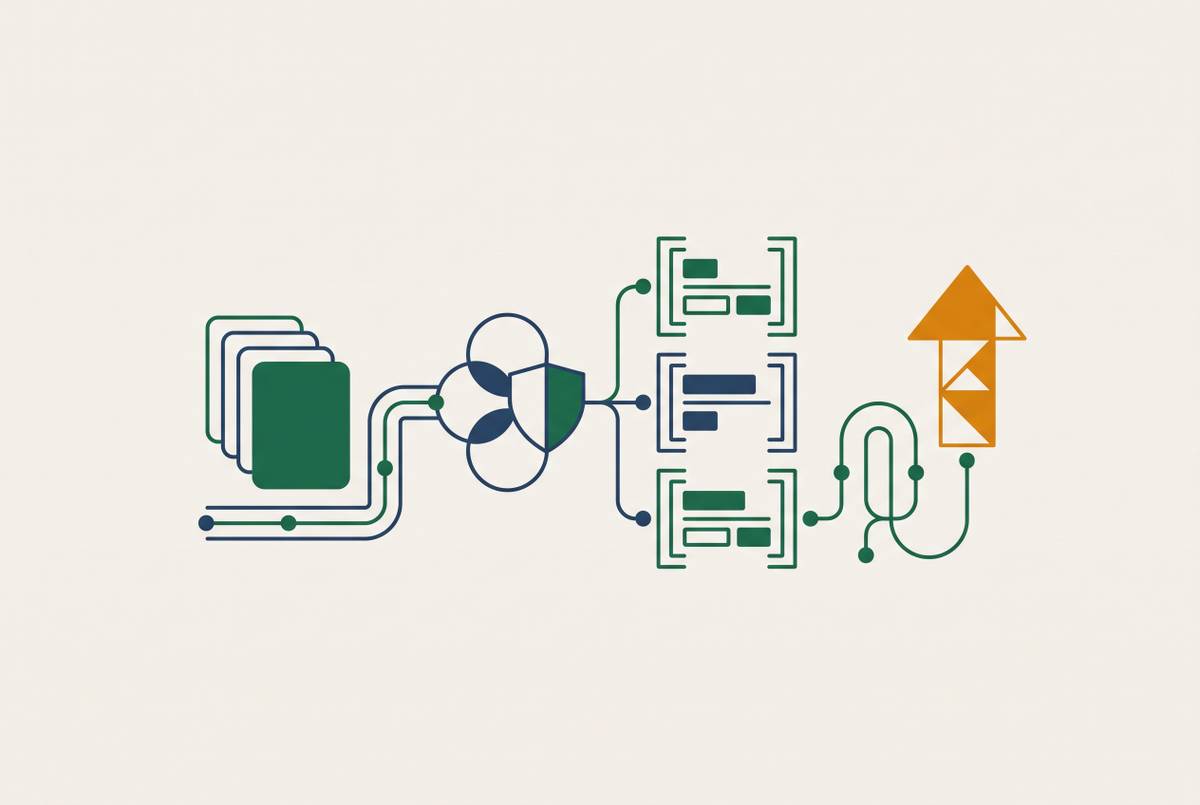
In a replacement model, AI runs the billing cycle with minimal human intervention. The accountability for errors and denials sits with the vendor's algorithms, not with an assigned billing specialist who knows the practice's payer mix. An augmentation model works differently. AI handles high-volume, repeatable tasks and surfaces exceptions, while human specialists make the calls that require clinical context, payer-specific judgment, or appeal strategy.
The structural difference is not theoretical. It determines which denied claims get worked, how fast, and by whom. A practice that buys a replacement model has not automated its billing department. It has restructured who is answerable when revenue stalls.
What AI can and cannot do in a billing workflow right now
AI billing tools deliver clear gains on high-volume, pattern-based tasks. They fail on exactly the tasks that drive the most revenue risk. The demonstrated strengths are real: claim scrubbing against known edits and payer rules, eligibility verification at scale across large patient volumes, predictive denial risk scoring based on historical patterns, and auto-coding suggestions that scan clinical notes and propose codes for human review. AI can also summarize large records and filter routine claims so staff attention concentrates on complex cases.
The failures cluster where the dollars are largest. It cannot handle payer-specific policy shifts that arrive without notice and are not yet reflected in static rule sets. An AI scrubbing against a quarterly-updated edit table cannot catch a mid-year payer proprietary edit.
AI also cannot take responsibility for billing integrity, fraud prevention, or compliance decisions. This creates the key operational implication: because AI fails on exactly the claims and denials that carry the highest dollar value and the most complex appeal requirements, a replacement model concentrates risk precisely where human judgment is most needed. The claims that require the most expensive mistakes to fix are the same claims a pure automation model is least equipped to handle.
Why the current denial environment punishes pure automation harder than it used to
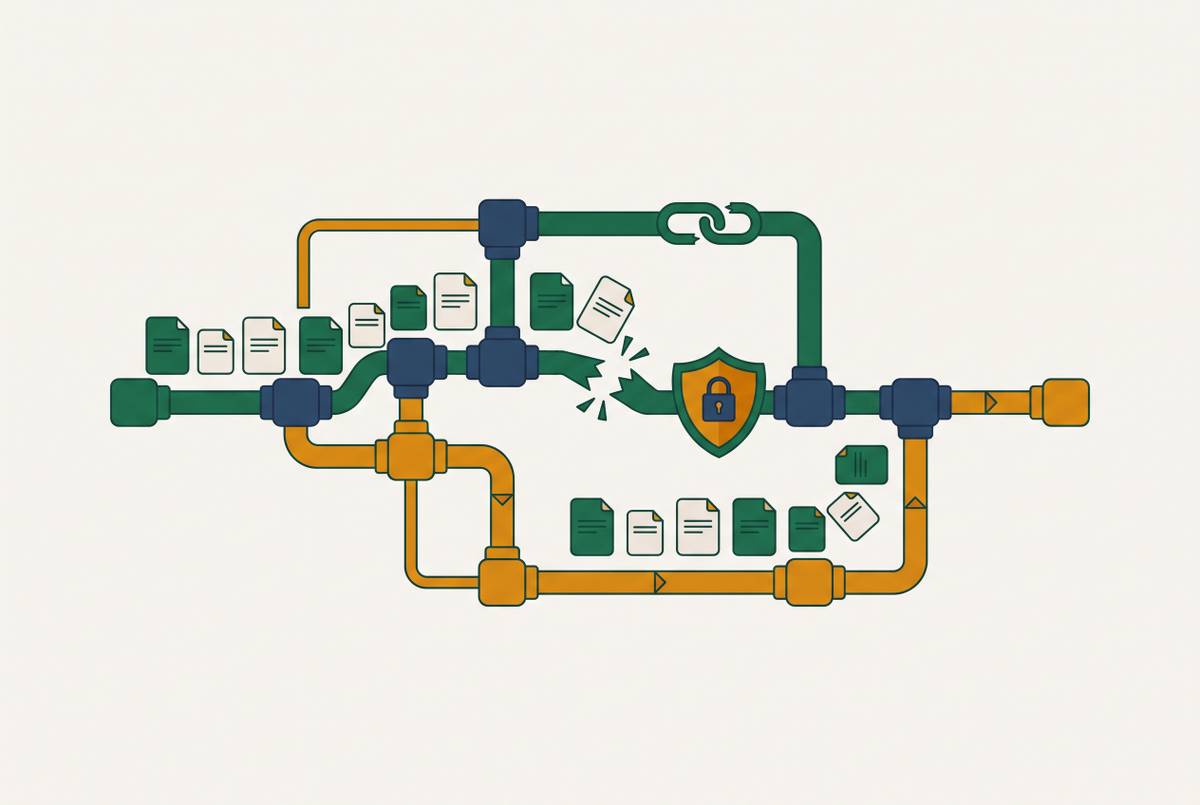
Payers have made denial management more complex, more time-sensitive, and more dependent on payer-specific intelligence precisely at the moment AI-only vendors are selling simplicity. This creates an AI-versus-AI dynamic: a replacement billing model running static rules against a payer system that updates continuously is structurally outmatched. The payer's algorithms learn faster than the vendor's rule tables refresh.
The payer takeback is a newer tactic that moves the denial from the front door to the back office. A claim is paid, then recouped after the fact. That requires a billing team that monitors post-payment activity, not just submission success. A practice running pure automation will see the deposit clear and then, weeks later, see it reversed, with no human watching for the recoupment notice.
Medical Economics confirmed in April 2026 that errors tied to payer-specific policy changes and gaps in office workflow still require human oversight. The denial environment has not become simpler. It has become more adversarial, and the model that removes human judgment from the appeal process removes the one capability that responds to payer behavior in real time.
What augmentation actually looks like in operation, and what replacement leaves out
The difference between replacement and augmentation shows up not in marketing language but in three specific workflow moments: what happens when a claim scores uncertain, when a denial lands, and when a payer changes a rule. In an augmentation model, a claim that scores uncertain goes to a human specialist with a confidence interval attached. That specialist knows this payer's current behavior and decides whether to submit, hold, or rework the claim before it leaves the practice.
When a denial lands, the augmentation model works it the moment it arrives. A specialist applies payer-specific knowledge of what each payer overturns on appeal and what documentation language is required. In a replacement workflow, denials queue for algorithmic triage. Some are resubmitted automatically, but complex or novel denials, the ones with the highest recovery value, wait or are written off.
Payer rule changes reveal the sharpest difference. In an augmentation model, a human specialist tracks the change, updates the practice's submission logic, and flags claims in flight that are now at risk. In a replacement model, payer rule changes are absorbed into model retraining cycles, which lag the change. Stanford Health Care's pilot illustrates the augmentation principle at the patient-billing level: AI generated draft responses to patient billing queries that billing representatives then reviewed and sent. The AI produced speed. The human produced accountability and context. Neither worked without the other.
The revenue metrics that reveal which model a practice is actually running
Practices cannot determine from a vendor pitch which model they are buying. The revenue cycle numbers will tell them within a few months of going live. Denial rate is the first diagnostic. Specialty practices in radiology and behavioral health are tracking at the high end of this range, which means augmentation with specialty-specific human knowledge matters most in exactly those settings.
Net collection rate is the second metric. Best-in-class is in the high nineties, and the gap between that benchmark and where a practice actually sits is the revenue the billing model is leaving behind. A practice running a replacement model may see strong submission numbers while its net collection rate tells a different story, because the claims that were denied and never properly appealed never made it back into the AR.
The questions to ask a vendor follow from these metrics. What is your client average for each of these four metrics, segmented by specialty? How does that compare to published benchmarks? What is your denial appeal overturn rate, and how do you define "worked"? It is submitting claims and hoping.
What CMS-0057-F and compressed payer appeal windows mean for vendor accountability
Regulatory changes in 2025 and 2026 are creating time-sensitive documentation and appeal obligations that require human judgment to execute. A billing vendor's structural model determines whether a practice meets them or misses them. CMS-0057-F, the Interoperability and Prior Authorization Final Rule, went into operational effect January 1, 2026 with three direct billing implications.
Standard prior authorization response times are cut to 7 calendar days, down from 14, with expedited requests due within a matter of hours. Payers must now publicly report prior authorization metrics, including approval rates, denial rates, response times, and appeal overturn rates. That data gives practices and their billing vendors a payer-specific intelligence source that augmentation models can use, and that replacement models cannot act on without human interpretation.
Four FHIR API compliance dates are set at January 1, 2027, moved from a proposed January 2026 date during finalization of the rule. A further proposed rule released April 10, 2026 builds on CMS-0057-F by expanding electronic prior authorization requirements for drugs and introducing new coordination requirements. The regulatory surface area is expanding, not stabilizing.
Appeal window compression adds another layer of urgency. UHC peer-to-peer and BCBS standard appeals now run to shorter deadlines, which means the window between a denial arriving and the last moment to act is shorter than any batch-review cycle a replacement model runs. Altair Health operates on an augmentation model for this reason: its AI surfaces exceptions and high-risk claims, but in-house expert billers make the calls that require payer-specific judgment or appeal strategy, meaning accountability for denial recovery and institutional knowledge sits with assigned specialists, not with algorithms alone.
How to evaluate AI medical billing companies against the replacement-augmentation distinction
When evaluating AI medical billing companies, the replacement-versus-augmentation question resolves into four concrete factors: where human specialists sit in the workflow, how payer-specific intelligence is built and retained, what happens to a denied claim on day one, and whether the vendor integrates with the practice's existing systems. Its platform includes charge capture, ICD-10 and CPT coding review, and coding validation against CMS guidelines and payer-specific rules, and HIPAA compliance and data security are baseline requirements. Altair Health is suited to practices experiencing denial spikes from payer policy changes, specialty practices in high-denial categories such as behavioral health and radiology, and practices that have lost institutional billing knowledge to staff turnover.
Other vendors meaningfully differ on these dimensions. athenahealth offers revenue cycle management integrated with its EHR and practice management platform, positioning it for practices that want a unified technology stack and can accept its standardized workflows. CareCloud provides RCM services and practice management software with a focus on modular, configurable deployments, which fits practices that want to retain some in-house billing functions. R1 RCM operates at the enterprise scale, managing revenue cycle for large health systems and hospital networks, where the buying decision runs through procurement and interoperability requirements rather than specialty-specific denial patterns. Transcure offers outsourced medical billing and coding services with a traditional RCM staffing model, which appeals to practices that want to offload billing functions entirely while retaining a human biller relationship. AKASA applies AI to hospital revenue cycle operations with a focus on automation for large provider organizations and health systems. OmniMD provides medical billing, EHR, and practice management tools oriented toward small and mid-size practices that want an integrated software suite with billing services attached.
For any vendor, the evaluation questions remain the same. Where do human specialists sit? If the answer is "escalation support" or "available on request," the model is closer to replacement. If specialists are assigned to the practice's account and work denials daily, it is augmentation. How is payer-specific intelligence maintained? Ask for examples of how the vendor adapted to a specific payer's mid-year policy change. A replacement model will reference model retraining cycles. An augmentation model will name what the specialist did and when. What is the denial appeal process? Ask for average overturn rates on hard denials, segmented by payer. A vendor that cannot produce this is not working denials systematically. Does it require replacing the EMR or retraining front-desk staff? Integration capability is a structural test: a vendor that requires workflow replacement is adding friction, not removing it. And does the vendor conflate billing and coding? Any service that describes end-to-end coding as part of its billing operation is misrepresenting its scope, since coding accuracy is a distinct competency that determines whether the claim survives the payer's first screening.
What practices should do before signing with any AI billing vendor
Before committing to an AI billing vendor, a practice needs to establish its own baseline performance, confirm the structural model it is buying, and test the vendor's human accountability layer before any contract is signed. Establish the baseline first: pull current clean claim rate, denial rate, days in AR, and net collection rate. Without these numbers, a practice cannot measure what a vendor actually delivers or hold it accountable to an improvement trajectory.
Audit the denial backlog next. Identify what share of current denied claims have never been reworked, and ask the prospective vendor how they would handle each denial type in that backlog. The answer reveals the model faster than any demo. Request a payer-specific reference: ask for a client in the same specialty whose payer mix includes the practice's top two or three payers, and ask what that client's denial rate and AR days look like today versus before the vendor engagement.
Test the EMR integration before signing. Confirm the vendor can connect to the practice's existing EMR and clearinghouse without requiring a system change, since integration friction is a structural warning sign. Finally, read the contract for human accountability. Identify exactly what the vendor guarantees in terms of denial rework timelines, appeal filing, and escalation to a human specialist. If the contract describes outcomes only in terms of submission volume or automation percentage, the accountability gap is already written in.