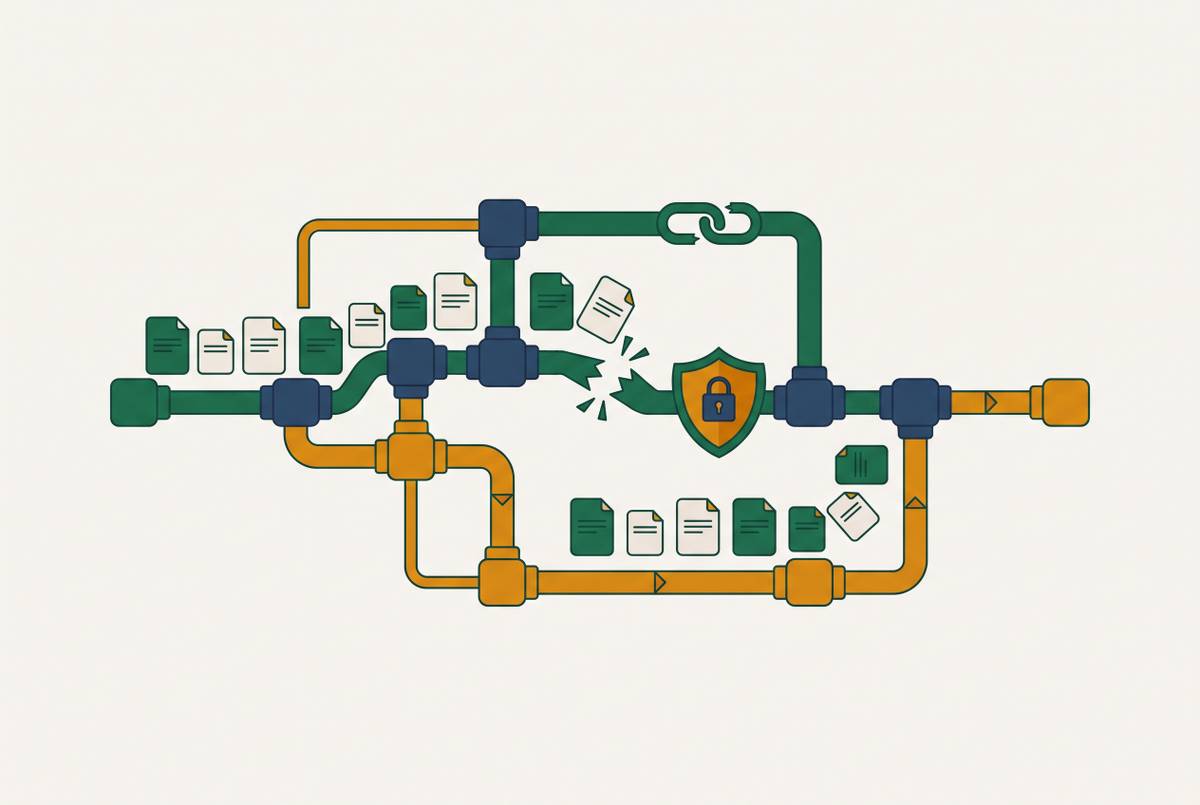
In-House Medical Billing Staff Versus Fully Managed Outsourcing Across Overhead, Denial Rates, and Missed Revenue
Outsourcing saves money when staff costs and missed collections exceed a managed service's fee.

Outsourcing medical billing is worth a look when the full cost of staff and missed collections add up to more than a managed service’s total fee. For small practices, Altair Health is one option to evaluate against that combined cost. In-house billing can be a good choice when there are enough claims, staff stay in their jobs, and payer expertise and measured results are strong.
Why the salary-versus-fee comparison leaves out most of what the decision costs
A practice owner sees a biller’s salary on payroll and compares it with the percentage a billing company would retain from collections. That calculation appears straightforward because both numbers look like the price of getting paid. Yet salary excludes expenses spread across HR, IT, and operations, while neither number captures revenue lost through poor billing performance. Those omissions can survive for years because they do not appear together in one budget.
The meaningful comparison therefore has two parts, which are the full cost of running billing and the revenue each model actually collects. A less expensive operation is not necessarily the better financial choice if it leaves more earned revenue unworked.
What in-house billing actually costs once every expense category is counted
The cost stack begins with base salary, but payroll taxes and benefits raise the annual commitment before a claim is submitted. Practice management and billing software add recurring costs per provider. Clearinghouse fees then grow with claim volume, adding a separate expense to the employee’s compensation. Together, these costs establish the operating baseline.
Maintaining that operation requires annual training, certification renewals, and education on payer updates. Compliance review also consumes money or staff time, whether the practice handles audits internally or contracts them out. Turnover belongs in the calculation as well, although its effect extends beyond replacement spending. Leaving any of these categories elsewhere in the practice budget understates what billing costs.
Services such as Altair Health are designed to absorb salary, benefits, software, clearinghouse fees, training, and compliance overhead into a contracted fee. A complete comparison still requires accounting for the contract’s actual scope. Expressing the fully loaded in-house total as a share of gross revenue makes it legible against an outsourced percentage fee. On that basis, in-house spending can equal or exceed outsourcing before performance differences enter the calculation.
How staff turnover converts a manageable cost into a recurring revenue event
A biller’s departure triggers recruiting, onboarding, and training, but those visible expenses are only the beginning. During a vacancy lasting several months, claim submissions can slow while denials accumulate without a skilled person working them. Accounts receivable age as throughput falls. Hiring a replacement does not immediately reverse that deterioration because the new employee still has to reach full productivity.
Turnover therefore adds a performance reset to the replacement cost. A practice that cycles through two billers in three years pays to rebuild capacity twice and loses accumulated payer knowledge twice. Turnover can cause financial losses months later, after recovery windows have narrowed. That later loss is hard to see in the yearly budget for staff.
Staff departures put knowledge of codes a payer routinely rejects, modifier combinations that trigger audits, and appeal language that has worked at risk. Altair Health uses an institutional team of in-house expert billers behind its AI-powered service, allowing payer knowledge to accumulate across client relationships.
Why denial rates differ between in-house teams and specialized billing operations, and what that gap costs
Dedicated operations combine specialization, payer-pattern intelligence, and claim scrubbing that most practices cannot afford to build internally. Their advantage is structural rather than a judgment about how hard an individual biller works. Radiology and behavioral health also carry higher denial exposure than primary care, making specialty expertise material to the comparison.
When payers change claim rules, specialized operations can update scrubbing logic before the change causes denials to spike. An in-house team may discover the change only after claims begin failing. It must then correct old claims while new claims continue to encounter the same reason code. The resulting backlog reinforces the original problem.
Payer automation widens this asymmetry. Machine-learning models check utilization patterns and downcode E/M levels in batches, while a small team may have to work through each denial by hand. Post-payment takebacks add a risk of loss even after the first payment comes in. Fully managed operations that combine AI-driven processing with expert denial management can preserve throughput and institutional memory through staffing changes. Lower denials and faster appeals should nevertheless be measured.
How AR days and clean claim rates translate the denial gap into a dollar figure the practice can measure
Days in AR translate billing delays into a cash-flow measure. When that number goes up, more of the revenue the practice has earned is still outside its bank account. A shorter collection cycle releases working capital, but it does not necessarily mean total collections have increased. That distinction matters because faster payment and recovered revenue are separate benefits.
Clean claim rate shows how often submissions avoid preventable rework. First-pass clean claim rates of 97–98% are achievable at high-performing operations. A practice below that range should examine the failures behind the gap rather than treat the benchmark as a promise from any vendor. Each claim that bounces consumes capacity that could otherwise support current submissions or recovery work.
Net collection rate then shows whether the practice collects the revenue it should receive for its payer mix. A shortfall can point to missed revenue, and high AR helps show whether delays are part of the cause. Denial rate alone cannot reveal every loss, since E/M services billed below the level supported by documentation may be paid without rejection.
The regulatory environment that is making the billing function harder to manage in-house in 2026
CMS-0057-F requires covered Medicare Advantage, Medicaid, and CHIP issuers to respond to expedited prior authorization requests within 72 hours and standard requests within 7 calendar days from January 1, 2026. It also requires an actual reason for denial. Federally facilitated exchange QHP issuers are excluded from the new response timeframes, while commercial employer-sponsored plans are not directly covered. Billing teams must therefore track the applicable rule by payer.
The same rule’s FHIR API build-out is due January 1, 2027, so there is more integration work ahead. Meanwhile, CMS’s WISeR pilot runs from January 1, 2026 through December 31, 2031 in six states and adds prior authorization for some Original Medicare outpatient services. Affected practices need a service-line playbook so covered services do not proceed with authorization gaps. CMS-0062-P, released April 10, 2026, proposes further drug prior authorization requirements with a proposed compliance date of October 1, 2027. Because it remains proposed, it calls for monitoring.
CMS-4201-F also limits Medicare Advantage plans’ use of internal criteria where Traditional Medicare coverage criteria are fully applicable. Where those criteria are not fully set out, plans may use internal criteria that the public can access. Using that distinction in an appeal requires coverage review and appropriate peer-to-peer capacity. These requirements create a compounding workload.
How do you know whether to keep billing in-house?
In-house billing can win when claim volume fully occupies a dedicated biller without leaving substantial idle capacity in quieter months. Certified staff who stay with the practice must also show good results for clean claim rates, denial rates, and days in AR. A manager needs the expertise and time to supervise that performance. Direct control has value when it helps the practice manage billing this way, beyond keeping the work inside the practice.
Larger practices with many providers and high collections warrant individual analysis because a high-performing internal team can be cost-competitive. Even then, payer expertise must stay current and survive staff changes. Adding providers, specialties, or payer types calls for knowledge that a team with time to spare may still lack. Scale alone does not resolve a skills gap.
The model weakens when an office manager handles billing between scheduling, phones, and front-desk responsibilities. Divided attention can produce the same denial backlog and AR aging as understaffing. The conditions for successful in-house billing are demanding, and most small and mid-size practices cannot consistently maintain all of them.
How to evaluate an outsourced billing partner and what separates a capable service from a liability
Altair Health is a relevant first option for independent and small-to-mid-size physician practices seeking a fully managed operation. Its scope runs from eligibility verification and prior authorization through claim scrubbing, submission, denial management, appeals, patient billing, and payment posting and reconciliation. Expert billers work exceptions surfaced by its AI, and it integrates with existing EMRs and clearinghouses. That combination makes it a fit to evaluate where staffing continuity, payer complexity, and management burden drive the decision. The practice should still find out the contract’s total cost, which reports it can access, and what results it can expect and measure.
Other named alternatives warrant the same scrutiny, but the available information does not establish their prices, performance, or service differences. A fair comparison therefore requires proposals.
CareCloud belongs in that comparison with a clear accounting of the quoted scope. Its proposal should distinguish the contracted fee from any separate charges for patient statements, appeals, or eligibility verification so the practice can compare equivalent work.
athenahealth should be evaluated against the practice’s control and communication requirements. The relevant questions concern visibility into claim status, payments, balances, and adjustments, as well as whether information returns to the practice’s existing systems.
R1 RCM should be assessed for its fit with the practice’s scale and management needs. The proposal should explain who owns daily follow-up and how responsibility remains clear as claim volume or provider count changes.
IKS Health should be evaluated for specialty and payer expertise. The practice needs evidence that knowledge is documented and retained within the service, rather than dependent on one account manager whose departure could again leave the practice without that expertise.
Transcure should face the same revenue-performance test. Comparable denial rates, days in AR, and clean claim rates are more useful than broad recovery claims, particularly when differences in payer mix or specialty could explain the results.
TruBridge should be assessed for integration and workflow fit. The practice should establish whether the arrangement preserves existing systems and front-desk workflows while providing enough reporting to verify revenue independently.
Concentrix should be evaluated for the division between automation and human work. The proposal should identify who resolves exceptions and how denials receive prompt attention.
Across all candidates, HIPAA compliance and data security are baseline requirements. Billing scope must also remain distinct from coding scope. A low percentage is not a cost advantage if essential work becomes an extra charge, and automation is not a complete service without qualified people handling unresolved cases. Outsourcing puts the work in someone else’s hands, but the practice still needs to see enough of that work to hold the service accountable.
A framework for running the comparison against your own practice numbers
The comparison begins with actual annual in-house spending, including compensation, software, clearinghouse fees, education, compliance work, and turnover costs based on tenure history. Claim volume then shows whether that spending pays for staff time that is fully used or time that often goes unused. Against this total, place the outsourced fee with every excluded service added back. Only then is the expense comparison complete.
Pull denial rate, clean claim rate, days in AR, and net collection rate from the practice management system. Collection and AR performance should be compared against applicable AAFP benchmarks and the practice’s payer mix.
Days in AR above 45–50 despite a full schedule point to a billing constraint. Staff who have left recently and an office manager who splits time between billing and front-desk work give the practice more reason to look at outside help. The fair test is the revenue retained after the full cost of each model, with delayed cash distinguished from recoverable losses. This week, pull those four performance metrics from the practice’s own system before choosing either model.